
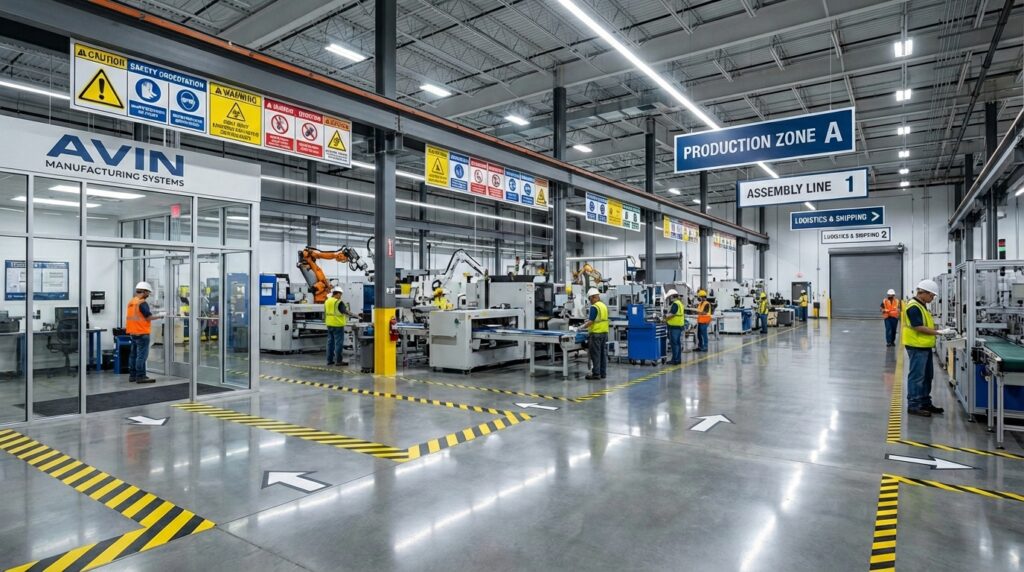
In the manufacturing industry, efficiency, safety, and clear communication are not optional — they are the foundation of daily operations. While companies invest heavily in machinery, workforce training, and production systems, one essential element is often underestimated: professional signage installation. Properly designed and installed signage is more than just visual guidance; it is a strategic tool that improves workflow, enhances safety, and strengthens brand identity across the facility.
1. Enhances Workplace Safety
Manufacturing environments involve heavy machinery, hazardous materials, and complex processes. Professionally installed signage ensures that warning signs, safety instructions, and hazard indicators are placed exactly where they should be — visible, readable, and compliant with safety standards.
Clear safety signage helps:
Reduce workplace accidents
Guide employees during emergencies
Ensure compliance with industrial safety regulations
Protect both workers and visitors
Poorly placed or low-quality signage can lead to confusion, delays, and even serious injuries. Professional installers understand visibility angles, lighting conditions, and material durability, ensuring signs perform effectively in real industrial conditions.
2. Improves Workflow and Efficiency
Time is money in manufacturing. Workers moving through large production floors need clear directions to departments, storage zones, exits, and restricted areas. Professionally planned signage systems create a logical flow within the facility, reducing time wasted in searching or asking for directions.
When signage is strategically installed:
New employees adapt faster
Visitors and vendors navigate easily
Material movement becomes smoother
Production delays decrease
Even small improvements in navigation can lead to measurable gains in productivity over time.
3. Strengthens Brand Identity Inside and Outside the Facility
Your manufacturing plant is not just a workplace — it is also a representation of your brand. Clients, investors, inspectors, and partners often visit facilities. Professional signage installation ensures that company logos, directional boards, and branding elements are aligned, polished, and visually impressive.
Well-installed signage communicates:
Professionalism
Attention to detail
Organizational discipline
Brand credibility
A clean, well-branded facility instantly builds trust with visitors and stakeholders.
4. Ensures Durability in Industrial Conditions
Manufacturing environments can be harsh. Heat, dust, chemicals, vibration, and moisture can quickly damage poorly installed signage. Professionals select the right materials, mounting methods, and finishes based on environmental conditions.
For example:
Chemical-resistant coatings for factories using solvents
Heat-proof materials near furnaces
Reflective signage for low-light areas
Heavy-duty mounting for high-vibration zones
This expertise prevents frequent replacements and saves long-term costs.
5. Compliance with Industry Regulations
Many industries are legally required to display specific types of signage related to safety, operations, and emergency procedures. Professional installers are familiar with compliance standards, ensuring that signs meet size, font, color, and placement requirements.
Non-compliance can result in:
Penalties or fines
Failed inspections
Operational shutdown risks
Professional installation eliminates these risks and keeps your facility audit-ready.
6. Creates a Structured and Organized Environment
A manufacturing plant with clear signage looks organized, disciplined, and efficient. When every section is properly labeled and every direction clearly marked, it creates a structured environment that boosts employee confidence and morale. Workers perform better in spaces that feel well-managed and thoughtfully designed.
Why DIY Installation Is Risky
Some companies try to cut costs by installing signage themselves. However, improper placement, weak mounting, poor alignment, or wrong material choice can lead to:
Reduced visibility
Safety hazards
Faster wear and tear
Unprofessional appearance
In the long run, fixing mistakes often costs more than hiring professionals from the start.
Final Thoughts
Professional signage installation is not just an aesthetic upgrade — it is a practical investment in safety, efficiency, compliance, and brand image. For manufacturing companies, where precision and organization are essential, professionally installed signage plays a vital role in daily operations and long-term success.
Businesses that prioritize high-quality signage systems create safer workplaces, smoother workflows, and stronger impressions on clients and partners. Simply put, the right signage — installed the right way — supports the entire manufacturing ecosystem.